Session 5 - Assignment 5: Ethical Use of AI, Data Privacy, and Cybersecurity
Session 5 - Assignment 5: Ethical Use of AI, Data Privacy, and Cybersecurity
Introduction
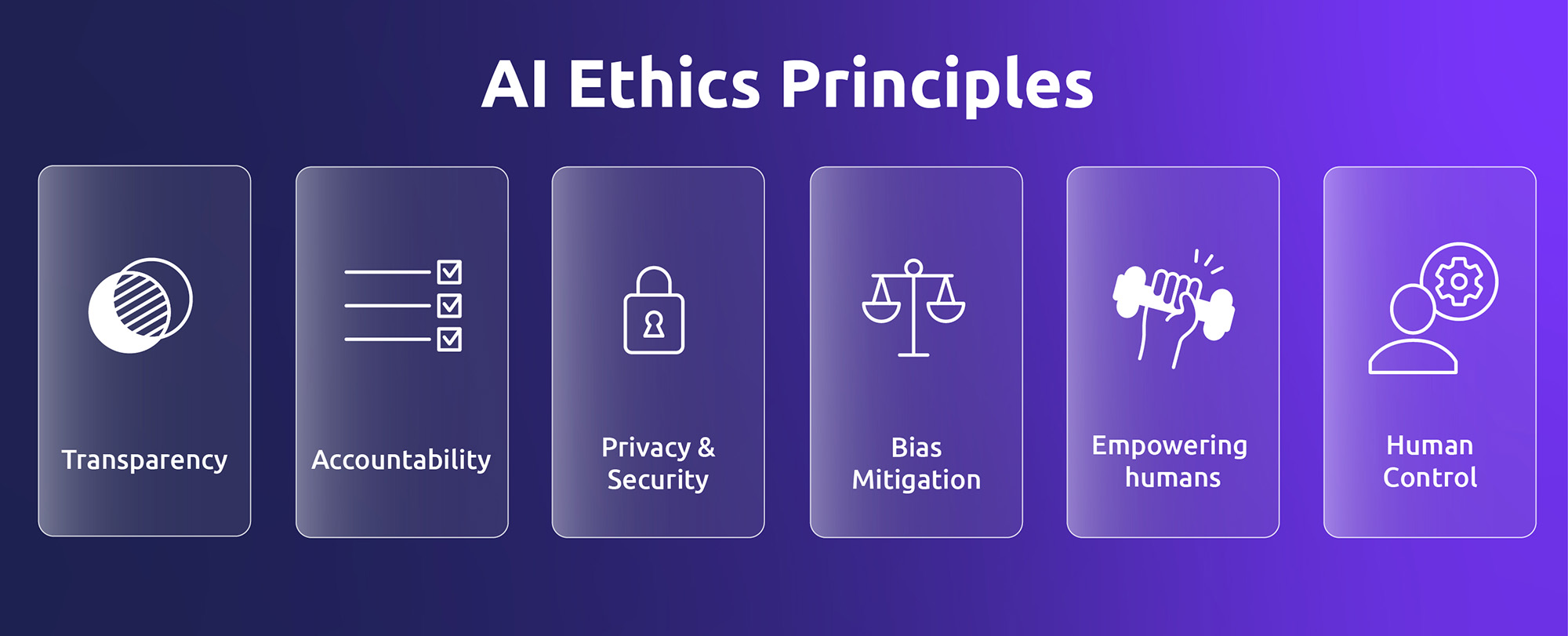
AI has grown and developed substantially within recent years, and with it come various concerns about its future integration. On one hand, AI has brought about the growth of certain jobs such as data analysts, AI and machine learning specialists, and other jobs in similar fields (Artificial Intelligence Impact). On the other hand, since the coming of AI, other jobs that were normally done with human effort have been declining as AI becomes integrated, such as Accounting, bookkeeping, and payroll clerks, data entry clerks, and even telemarketers (Artificial Intelligence Impact). In addition to the growth and potential displacement surrounding certain careers, concerns have arisen about the skill requirements needed to keep pace with the development of AI (Nawale). It is essential to consider the ethical implications, data privacy, and cybersecurity aspects surrounding the development and implementation of AI to ensure it remains beneficial and safe for the public to use. I personally feel that AI can be a great tool to supplement one’s abilities when used responsibly and with proper regulation. In my experience, AI has helped me in fast, efficient, and comprehensive ways and can be used to nurture progress in the future as it becomes a main part of our lives.
Here is a video explaining AI Ethics:
AI Gap Analysis:
I used ChatGPT for all of my AI Gap Analysis. The AI smoothed my transitions, made it closer to 200 words, and kept my voice. I only changed some words in the beginning and did some grammatical fixes suggested by Grammarly.
Ethical Issues in AI
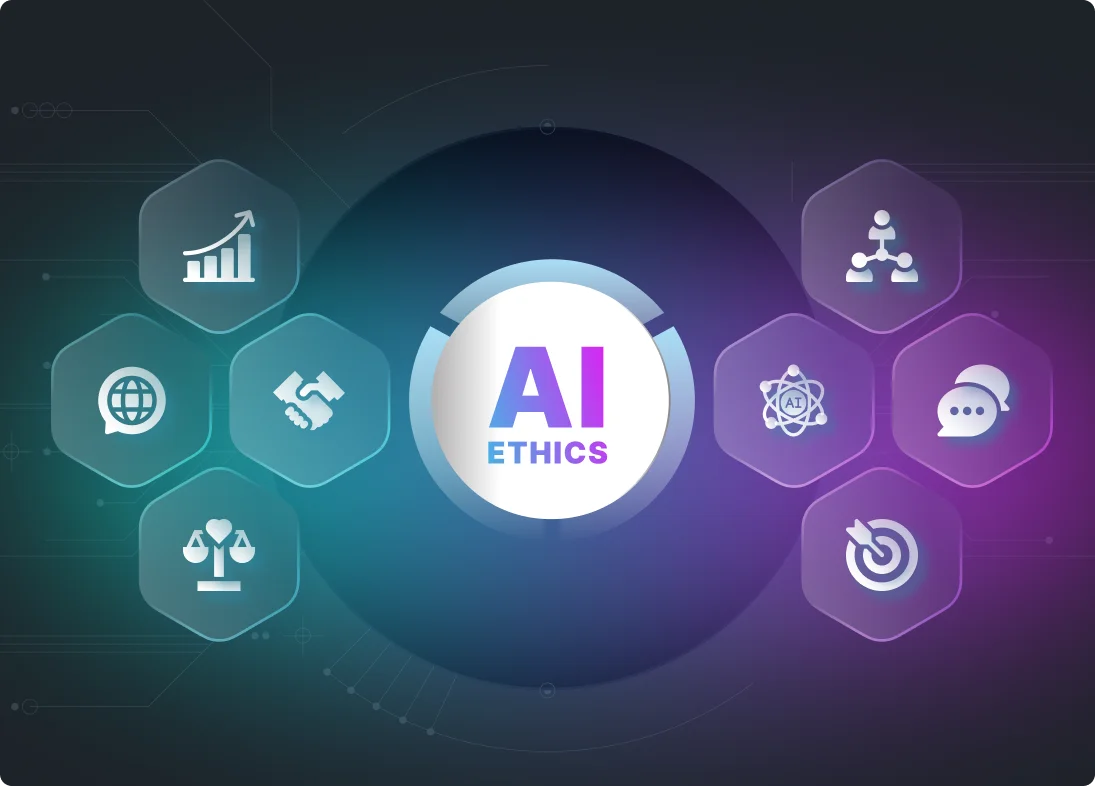
As AI continues to learn and expand, it is important to ensure that it remains impartial and fair to all who use it. This can be difficult, however, since the data AI learns from can reflect human bias. For example, predictive policing algorithms have the potential to unintentionally follow discriminatory patterns if the crime data they learns from is biased. Another ethical issue is transparency and explainability because most AI operate as black boxes, meaning that their inner workings are not understandable or transparent. This means that the AI comes to conclusions without an understandable justification for its answers. This can become an issue in high-risk areas such as the medical industry (GeeksforGeeks; Bradley). Fixing both of these issues would most likely require a detailed comb through of the data AI learns from to restrict biases and teach the AI to explain its answers. This is important because it helps keep AI beneficial and safe. For example, when using AI hiring software, it is important to ensure that it does not discriminate against minorities or other biases and explains why it makes its decision. Another example of why these ethical concerns are necessary is in the medical field, where it is important that there are no biases in analyzing the data and that it explains how it came to its result.
Here is a video explaining more ethical concerns:AI Gap Analysis:
AI tightened up my draft and helped keep it to 200 words. I only edited the beginning and did grammatical fixes.
Data Privacy
One of AI’s perks is how it manages to gather and analyze vast amounts of data; however, this also brings about some privacy concerns. For example, self-driving cars use AI technology to track one’s location and driving habits. This makes the technology safer but also creates risk regarding the protection of personal information (Western Governors University). While AI can improve safety, it can also make it easier for data breaches. One data breach was the Yum! Brands data breach in 2023, where a ransomware attack compromised employee information, and AI was used to decide which data to take. Another data breach was the TaskRabbit data breach in 2018, which affected over 3.75 million records, where the attacker used an AI-enabled botnet (Ng). Some ways to enhance data privacy are to require consent for one’s data to be used and to use browsers that are specifically designed for data privacy, such as DuckDuckGo (Western Governors University). As AI improves, it is important to find ways to protect user data. Especially in the medical field and the military, I can see data privacy being important because both have sensitive data that could be harmful if leaked. As technology improves for the public, so does the technology for cyberattacks, so it is important to have secure data protection.
Here is a video describing the importance of data privacy:
AI Gap Analysis:
AI smoothed out repetition, improved flow, and overall, just polished my draft. I only edited the beginning
Cybersecurity
AI provides both major benefits and detriments to the cybersecurity scene. While it has become a cornerstone in the protection against cyberattacks, it is also being used as a tool by the attackers. The AI’s ability to adapt and process vast amounts of data in such a short timespan makes it vital to both sides. These abilities are both its strength and weakness since the AI can process faster than human comprehension (Tuhin). Some ways to secure AI systems are through authentication, regulating access to a need-to-know basis, and authorization regulations (Ramel). AI is both cybersecurity’s greatest ally and foe. For example, while AI may be able to track natural activity on a bank’s database to check for threats, it can also disguise itself and adapt to go under the radar to attempt to snag sensitive information. It could pretend to be a customer using data from previous customer conversations or, on the defender side of cybersecurity, scour the business’s database to potentially predict threats or strengthen their defense by identifying their weak points (Tuhin). This game of cat and mouse between this AI technology has only begun and will continue as the AI advances on both sides.
Here is a video describing some pros and cons of AI in cybersecurity:
AI Gap Analysis:
Case Study/ Event Analysis:
Facebook revealed that, going as far back as 2007, they’ve been using public posts on social media to train their AI. Citizens were outraged by this because they were not aware of their data being collected and had no control over how it was being used. On top of this, they cannot easily opt out of this or delete the posts the AI has already analyzed from the database. This poses serious data privacy concerns as the public was not aware of their data being used and is still not fully informed of what Facebook is doing with the data. Only European users get the option to opt out because the rest of the countries lack proper regulation protecting the people at this time (besides Brazil, which banned Facebook’s use of their data completely) (Weatherbed). This type of situation is probably happening with more companies than the public is aware of, and without proper regulation, it will continue to happen in the future. It is important to press for privacy regulations to prevent being taken advantage of by companies, especially without your knowledge. For example, with Facebook doing this, the option to opt out should be easily accessible and easy to figure out. It should be a regulation that the public has the right to opt out of their data being used in this way, as well as being made aware that their data is being used in the first place.
AI Gap Analysis:
AI improved the flow and removed small redundancies. I only edited the beginning and added a small grammar fix.
Reflection:
The balance between the beneficial and malevolent use of AI is delicate and needs to be regulated to ensure that it remains safe and helpful for the public, especially when it comes to data privacy and maintaining an impartial and fair AI that is free of bias and discrimination. The use of public data should be regulated so that one can opt out easily if they so choose, and so that they are automatically opted out if they are a minor. On the front, when considering creating a bias-free AI, perhaps creating a career solely dedicated to de-biasing the AI and ensuring that the data it is allowed to use is bias-free will help the AI keep an impartial and beneficial view for all. The most important thing is to make sure the public has the choice to decide whether or not to be a part of the AI’s training. Once proper regulations are in place, AI will be able to truly grow and thrive as it improves and better supports human innovation. We are entering a new era of technology with AI, and as we gain our footing, the innovations we create with the help of AI will surely change the world.
AI Gap Analysis:
AI polished and removed repetition. I did grammatical fixes.
Works Cited:
Artificial Intelligence Impact on Labor Markets Literature Review P a G E | 2. https://www.iedconline.org/clientuploads/EDRP%20Logos/AI_Impact_on_Labor_Markets.pdf
Nawale, Rushikesh. “The Impact of Artificial Intelligence on Job Markets.” International Journal on Science and Technology, vol. 16, no. 3, 3 July 2025, www.ijsat.org/papers/2025/3/6761.pdf, https://doi.org/10.71097/ijsat.v16.i3.6761.
GeeksforGeeks. “Top 9 Ethical Issues in Artificial Intelligence.” GeeksforGeeks, 24 June 2024, www.geeksforgeeks.org/artificial-intelligence/top-9-ethical-issues-in-artificial-intelligence/.
Ethan Bradley. “Ethical Challenges in AI Decision Making.” ACE Journal, 3 June 2025, www.acejournal.org/2025/06/03/ethical-challenges-in-ai-decision-making.
Western Governors University. “How AI Is Affecting Information Privacy and Data.” Western Governors University, 29 Sept. 2021, www.wgu.edu/blog/how-ai-affecting-information-privacy-data2109.html.
Jean Ng. “Real-World Examples of AI Data Privacy Breaches” Linkedin.com, 14 Jan. 2025, www.linkedin.com/pulse/real-world-examples-ai-data-privacy- b reaches-jean-ng--kkcac/.
Muhammad Tuhin. “The Dark Side of AI: Cybersecurity Threats and Privacy Concerns.” Science News Today, 27 Mar. 2025, www.sciencenewstoday.org/the-dark-side-of-ai-cybersecurity-threats-and-privacy-concerns.
Ramel, David. "Report Lists Principles/Best Practices for Securing AI Systems -- Virtualization Review.” Virtualization Review, 2024, virtualizationreview.com/articles/2024/08/19/report-lists-principles-best-practices-for-securing-ai-systems.aspx. Accessed 26 Sept. 2025.
Muhammad Tuhin. “6 Ways Artificial Intelligence Is Redefining Cybersecurity.” Science News Today, 30 Apr. 2025, www.sciencenewstoday.org/6-ways-artificial-intelligence-is-redefining-cybersecurity.
Weatherbed, Jess. “Meta Fed Its AI on Everything Adults Have Publicly Posted since 2007.” The Verge, The Verge, 12 Sept. 2024, www.theverge.com/2024/9/12/24242789/meta-training-ai-models-facebook-instagram-photo-post-data.
Videos:
IBM Technology. “What Is AI Ethics?” YouTube, 30 Sept. 2021, www.youtube.com/watch?v=aGwYtUzMQUk.
Pattam, Aruna. “7 Ethical Issues with AI That YOU Should Know About.” Www.youtube.com, 6 June 2021, www.youtube.com/watch?v=KyB7NSWEODE
365 Data Science. “How Safe Is Your Data? (AI and Privacy Explained).” YouTube, 21 Mar. 2025, www.youtube.com/watch?v=N82TgjKU9yE.
Images:
AI Ethics Photo. www.diabolocom.com/wp-content/uploads/blog-ethic-artificial-intelligence-en_3.jpg. Accessed 26 Sept. 2025.
AI Ethics Picture. www.metadialog.com/wp-content/uploads/2023/08/ethics-of-ai.webp. Accessed 26 Sept. 2025.
AI Data Privacy Image. files.codingninjas.in/article_images/ai-and-data-privacy-0-1689340853.webp. Accessed 26 Sept. 2025.
Cybersecurity AI Image. www.orionnetworks.net/wp-content/uploads/2024/01/AI-Cybersecurity.jpg.webp. Accessed 26 Sept. 2025.
Comments
Post a Comment